
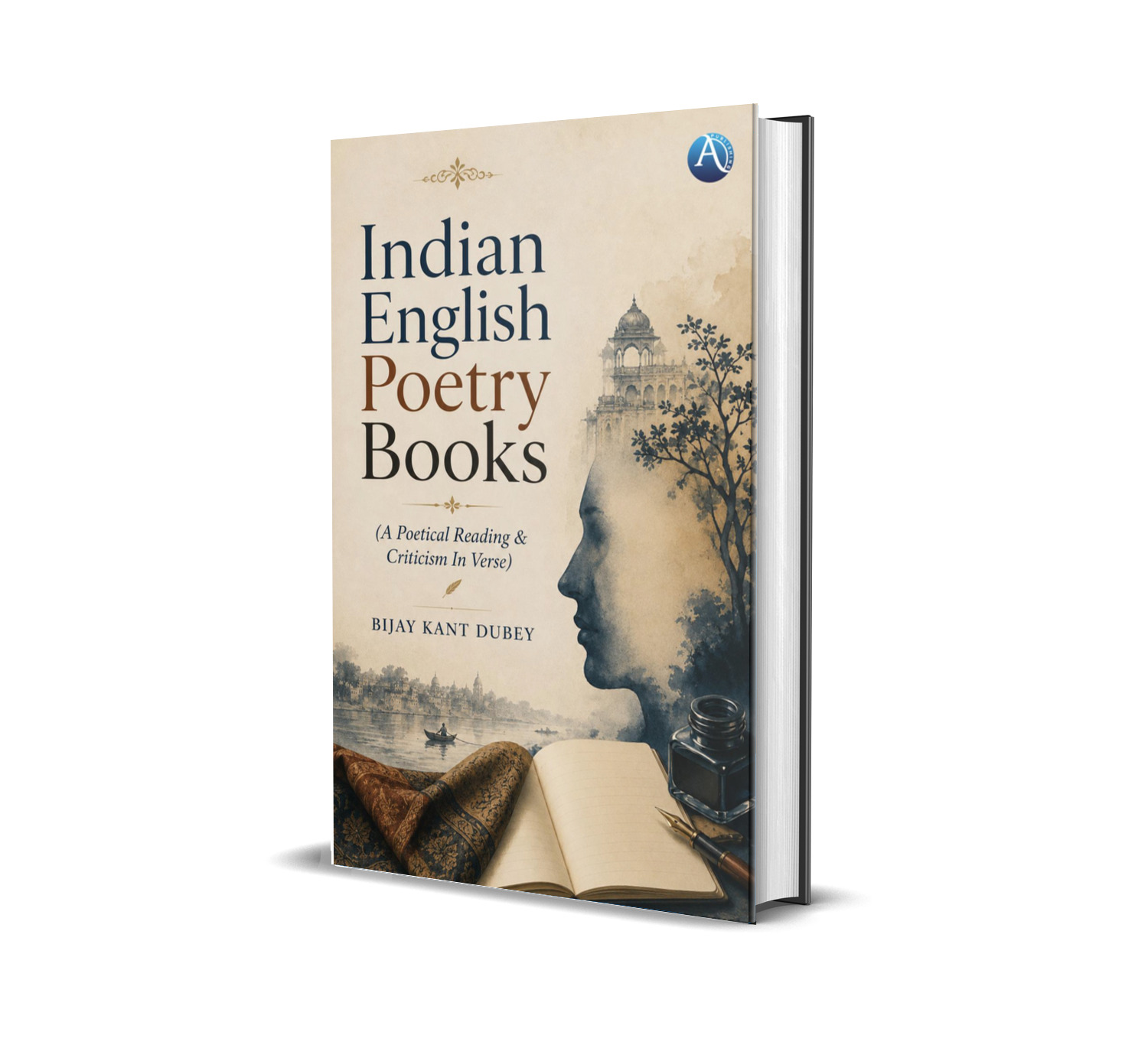
Indian English Poetry Books (A Poetical Reading & Criticism In Verse) is actually a study of such a virgin field of evolving literature which is now Indian English poetry after being Anglo-Indian, Indo-Anglican, Indo-Anglian and Indian poetry in English, but it does not complete here. Its base is one of Indology, Sanskrit studies, translation studies and classical literature, but could not feel it. The present work is a typical evaluation of the slender books and poetic matters of Indian English verse. How have the poems dripped drop by drop, how have the booklets tumbled and trickled down? What to say about it? How were the poems written without any coherence in theme and style lying apart? How did style deflect it? Instead of linguistic contours and ambiguities felt otherwise and constructive criticism done, The Fakir of Jungheera, The Shair & Other Poems, The Captive Ladie, Rajani, The Golden Threshold, Savitri, Gitanjali, Waiting, A Rain of Rites, Under Orion, Winter Poems, Crossing of Rivers and so on are the works taken up to illustrate or poetize the stuffs of deliberation. We generally like to take up Tagore, but know it not what has gone in the making of Tagore? Were there not any great poets before? Who was in his like? Has he become Tagore all of a sudden? There was definitely a tradition he drew from. We do not discuss it in our literature. Do we read Yeats’ Introduction to it as a finer piece of Indian English poetry criticism? We do not know it. Indian English poetry criticism is a matter of comments, opinions and reviews so far gone unnoticed which we have not tried to know those pieces of criticism. Do you know that Aurobindo’s poetic language is flawed and artificial? Aurobindo is never so spontaneous and natural though he attains something of that in his shorter pieces rather than the longer ones. But in Aurobindo is a rebel, a nationalist hidden too. Sometimes it baffles us when we come to know that he was involved in political intrigues and conspiracies. Have we tried to read the poems of his earlier phase? We do not want to criticize, but know the poetic self. How was it dictum and usage before illumination, before he turned into a yogi? In him is also hidden the pain of Mrinalini Devi which Aurobindo felt it not. We deplore it. This too to add to, how have notes, manual typescripts, Xerox copies and carbon copies have helped in letting modern Indian poetry take wings? The press was neither for it nor the standard publications to facilitate it as because the matter was not which portrayed them so miserably. The pressmen showed it not interest, the readers frowned upon reading substandard things which read we now profitably as they have been pushed and recommended and have come of age. How were our modern poets in the sixties? How were their publications? Was poetic and critical material available on them then? If you see the books, we mean the literary histories of that time, you will come to mark it. Indian English poetry is not so as we see it today. Modern Indian English poetry is not exactly so as you view it today. Say you, what is modern in modern Indian English poetry? How modern are they are so-called modern Indian English poets?
POETRY / General
Indian English Poetry Books (A Poetical Reading & Criticism In Verse)
₹270.00
By: Bijay Kant Dubey
ISBN: 9789366652306
Language: English
Pages: 176
Format: Paperback
Category: POETRY / General
Delivery Time: 7-9 Days

Reviews
There are no reviews yet.